
— ZELOCON GmbH · The Power of Superconductivity
Room-temperature superconductivity for microelectronics.
QUICK ANSWER →
1. ZELOCON develops graphite-based materials that exhibit superconducting properties above room temperature (~300 K).
2. The platform targets ultra-low-noise magnetic and quantum sensors, lossless interconnects, and high-frequency microelectronic components.
3. By operating at ambient temperatures, ZELOCON aims to eliminate the need for cryogenic cooling systems in superconducting microelectronics.
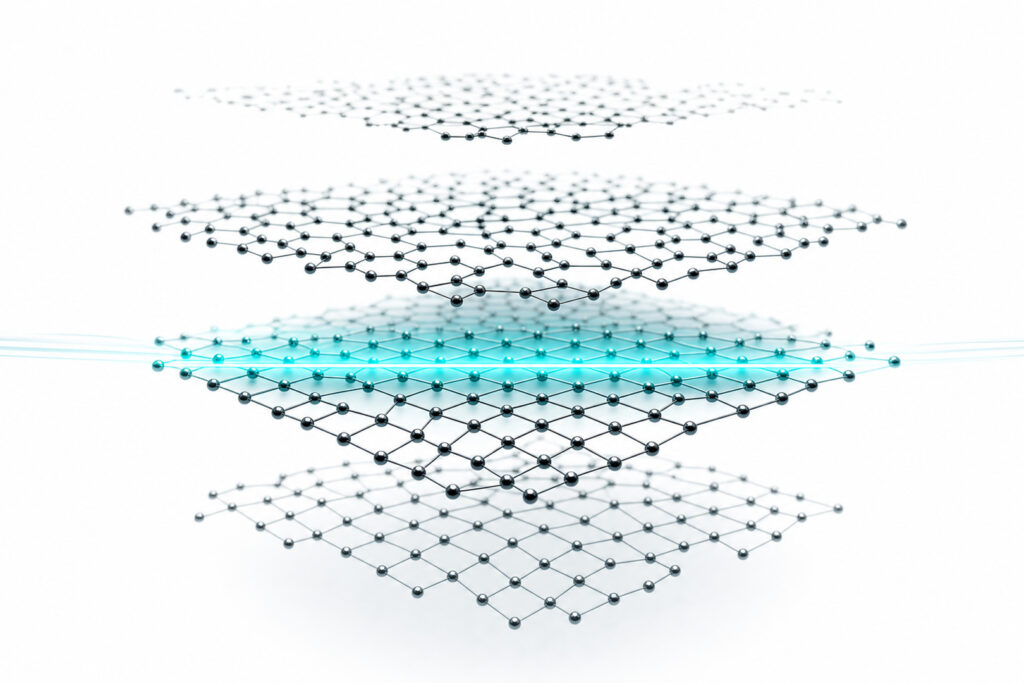
ZELOCON GmbH is a German deep-tech company developing carbon-based, room-temperature superconductivity for microelectronics. Our patented approach uses special stacked graphite layers crystal structure to enable superconducting effects at ambient temperature and pressure — the path to next-generation magnetic sensors, quantum components and energy-efficient electronics without cryogenics.
— Vision & Mission
What is ZELOCON's mission in superconductivity?
ZELOCON’s mission is to unleash electric current for powerful electronics and sensors that measurably improve daily life. We deliver breakthrough superconducting technologies that push the boundaries of today’s microelectronics, reduce environmental impact and create new economic opportunity — built on abundant carbon rather than scarce, cryogenically cooled materials.
— Three transformations
Where does room-temperature superconductivity reshape devices?
Room-temperature superconductivity reshapes three device categories most directly: magnetic-field detection, superconducting sensors and carbon electronics. In each, removing the cryostat changes the entire system architecture — not just a datasheet value.
Magnetic-field detection
Room-temperature superconductivity opens a new space for medical diagnostics: higher precision and real-time monitoring, without any cryogenics.
Superconducting sensors
Superior stability, quality and ultra-low noise at high temperatures — no cooling, at a fraction of the footprint of comparable technologies.
Carbon electronics
Built on widely available, 100% biocompatible graphite. No rare-earth elements, simpler supply chains and a path toward CMOS-adjacent manufacturing.
— The decisive difference
Why is thermal noise more important than temperature?
Thermal noise matters more than critical temperature because it, not Tc alone, limits real sensors, qubits and RF front-ends. Thermal noise is set by the ratio of operating temperature to the material’s Debye temperature (T/Θ_D) — the quantity that governs decoherence in a working device.
Graphite’s exceptionally stiff sp² lattice gives it one of the highest Debye temperatures of any solid (≈ 2000–2300 K). That keeps it in the quantum regime even at 300 K, where conventional superconductors are already “phonon-rich.” This is why carbon-based room-temperature superconductivity for microelectronics could be not merely possible, but genuinely low-noise.

— Operating principle
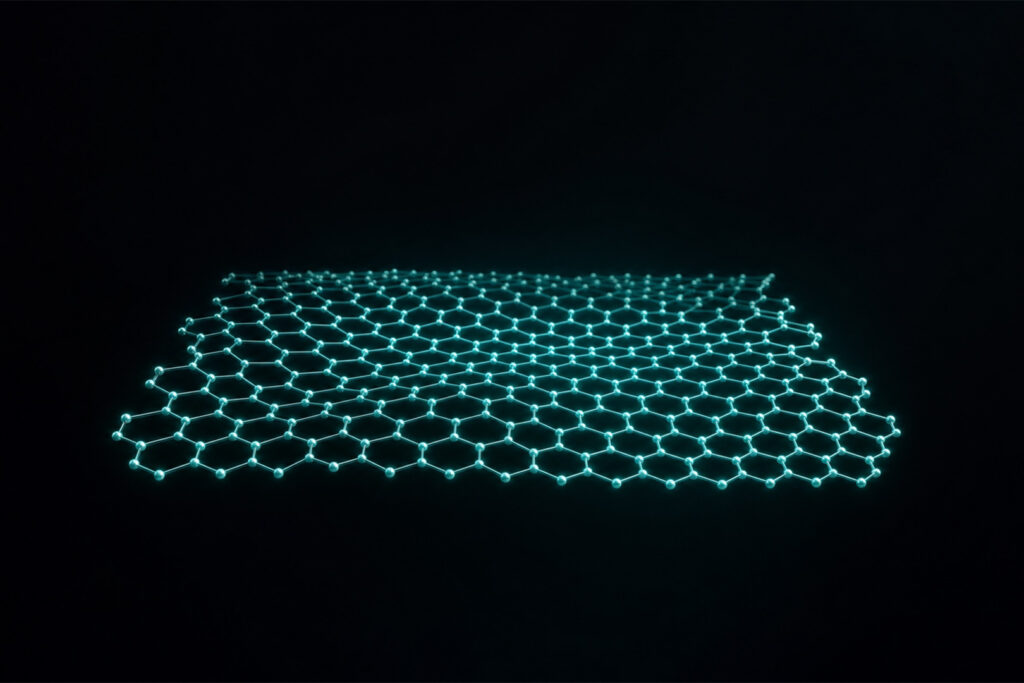
Superconductivity in the interfaces of graphite.
ZELOCON’s technology harnesses two-dimensional superconducting interfaces within a re-ordered graphite crystal structure — the functional zones where superconductivity is localized.
— Frequently asked questions
Frequently asked questions about ZELOCON
What is room-temperature superconductivity?
Room-temperature superconductivity is the ability of a material to conduct electricity with zero resistance at everyday temperatures (near 300 K), rather than only when cooled to cryogenic temperatures. ZELOCON pursues it using a carbon/graphite platform.
What does ZELOCON do?
ZELOCON is a German deep-tech company developing carbon-based, room-temperature superconductivity for microelectronics, including low-noise sensors, quantum components and energy-efficient devices that operate without cryogenics.
Why use graphite for superconductivity?
Graphite is abundant, 100% biocompatible and has an extremely high in-plane Debye temperature (≈ 2000–2300 K), which suppresses thermal noise and makes low-noise operation at room temperature physically plausible.
Ready to redefine what's technically possible?
Whether you’re a strategic partner, a research institution or an investor, we’d be glad to talk about the next generation of superconducting devices.